Anyone can come up with a good event concept. But creating a concept that really makes something happen takes more than creativity alone.
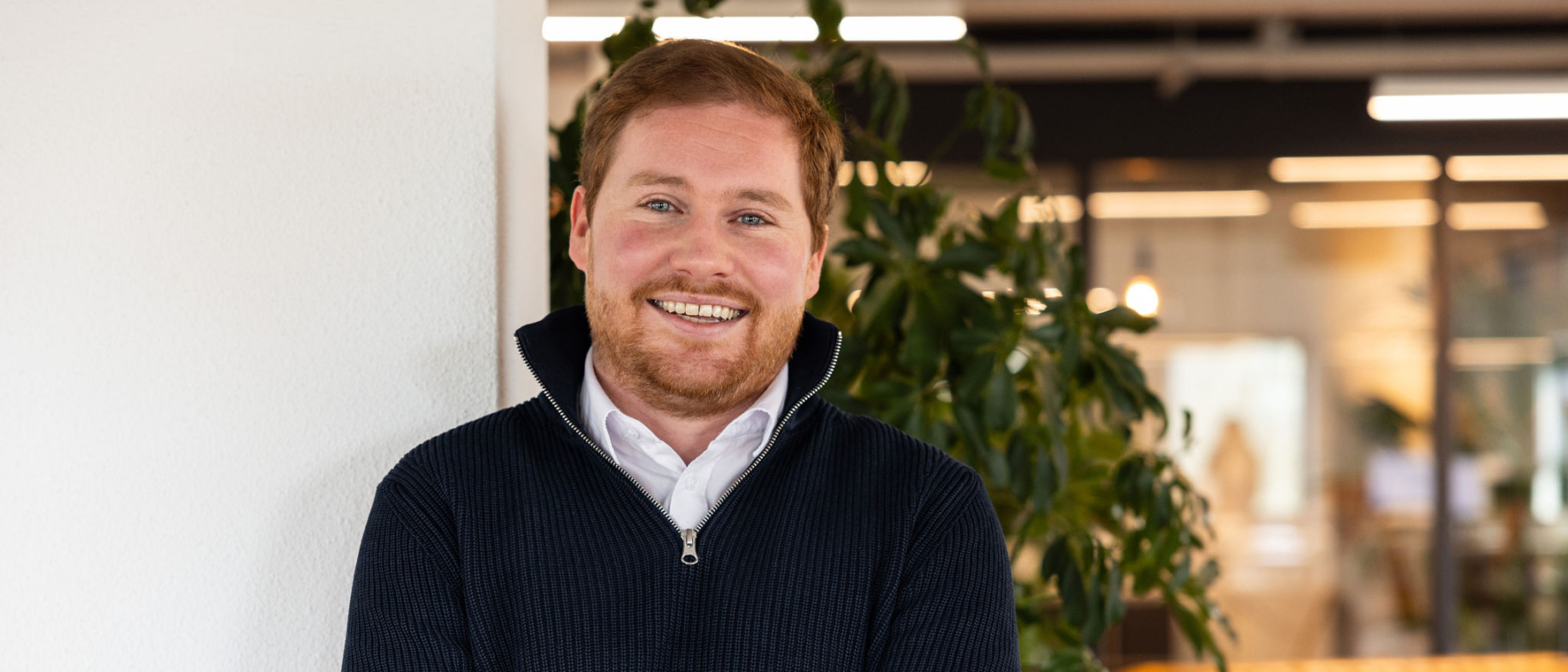
For years, the events industry was all about the most surprising idea. The activation people kept talking about. The performance that stayed with them. But according to concept developer Mark Gerdes from Obsession, the rules have changed. “Creativity is no longer what sets you apart. Relevance is.” Over the past three years, he has seen the role of event agencies shift: from supplier to strategic partner. From producing a beautiful event to thinking along about goals, content and impact.
The future of events is not about more, but about better
Creativity is part of everything
At the start of his career, Mark had to find his place in a world where creativity often seems self-evident. “You soon learn that creativity is not something you either have or do not have,” he says. “It develops as long as you keep experimenting and gaining experience. That is how you build the creative ability needed to create meaningful experiences.” A broad view is therefore important. Visitors do not only compare their event experience with other events, but with all kinds of experiences they have had elsewhere. They compare your event with an unforgettable restaurant evening, a festival or a TikTok video. The bar is not higher, but broader.
The power of building together
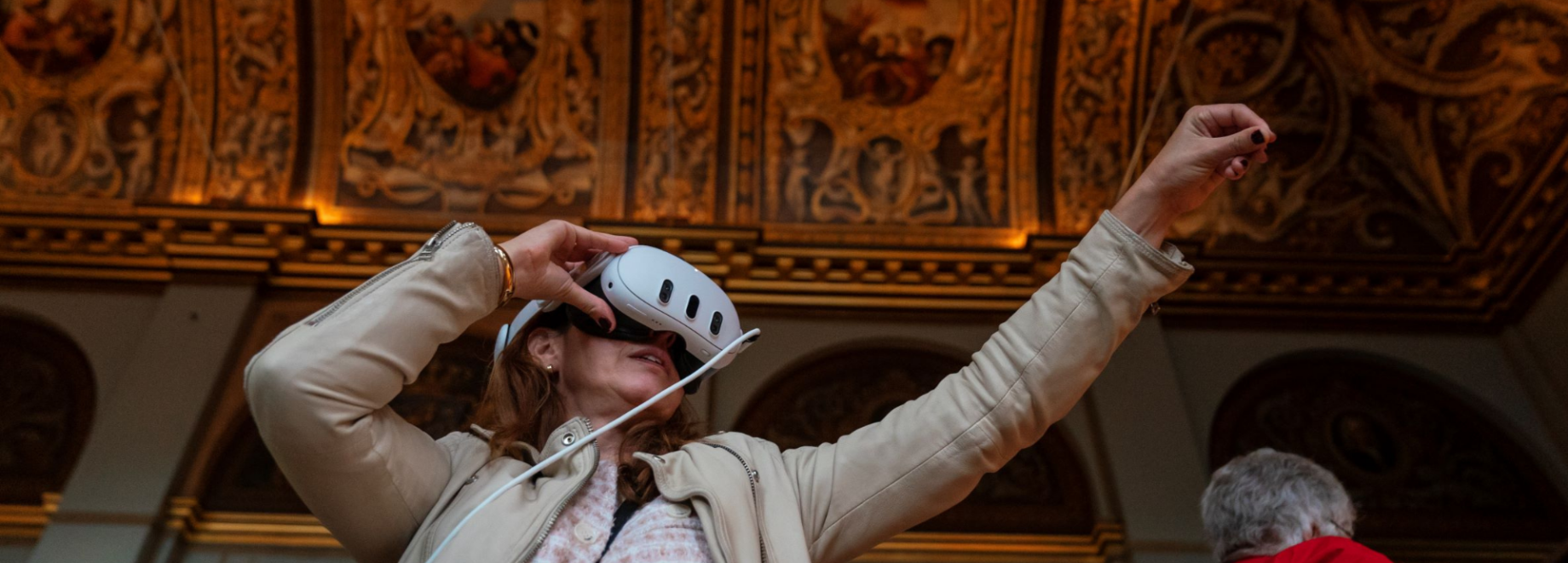
The way agencies and clients work together has also changed. In the past, the approach was often: you ask, we deliver. Now there is much more room for co-creation. “The best processes are the ones where we build together. Where you do not jump straight to solutions, but first explore what an event really needs to achieve,” says Mark. By actively involving clients in the process, there is more focus on the underlying goals of an event. This leads to concepts and solutions that do not only answer the brief, but also support what the organisation really wants to achieve.
This way of working also calls for a different internal approach. Project managers, who are responsible for event production, are joining brainstorms more often. Not only once the concept is finished, but at the moment the first choices are being made. Mark thinks this makes sense. “Project managers often know exactly what visitors value, which parts worked well and where the opportunities are. Why would we only use that knowledge once the concept is already finished?”

What makes a strong event concept in 2026?
“Focus,” says Mark. “You have to dare to choose. One strong idea with a clear thread works better than a collection of separate creative elements.”
What does that mean in practice?
- Relevance over spectacle (“kill your darlings”)
- A clear storyline
- A strong fit with the audience and objective
- Space in the programme
There is often a tendency to keep adding new parts to an event. But the strength of a good concept lies in making choices. Which parts clearly support the objective? And which elements distract, take up too much attention or do not add enough value?
Adding space to an event
The need for space in the programme is a trend we are seeing more and more. Events are becoming less packed and are deliberately leaving room for calm moments and spontaneous conversations. These are often the moments where real connection happens. Connection with each other, but also with the content.
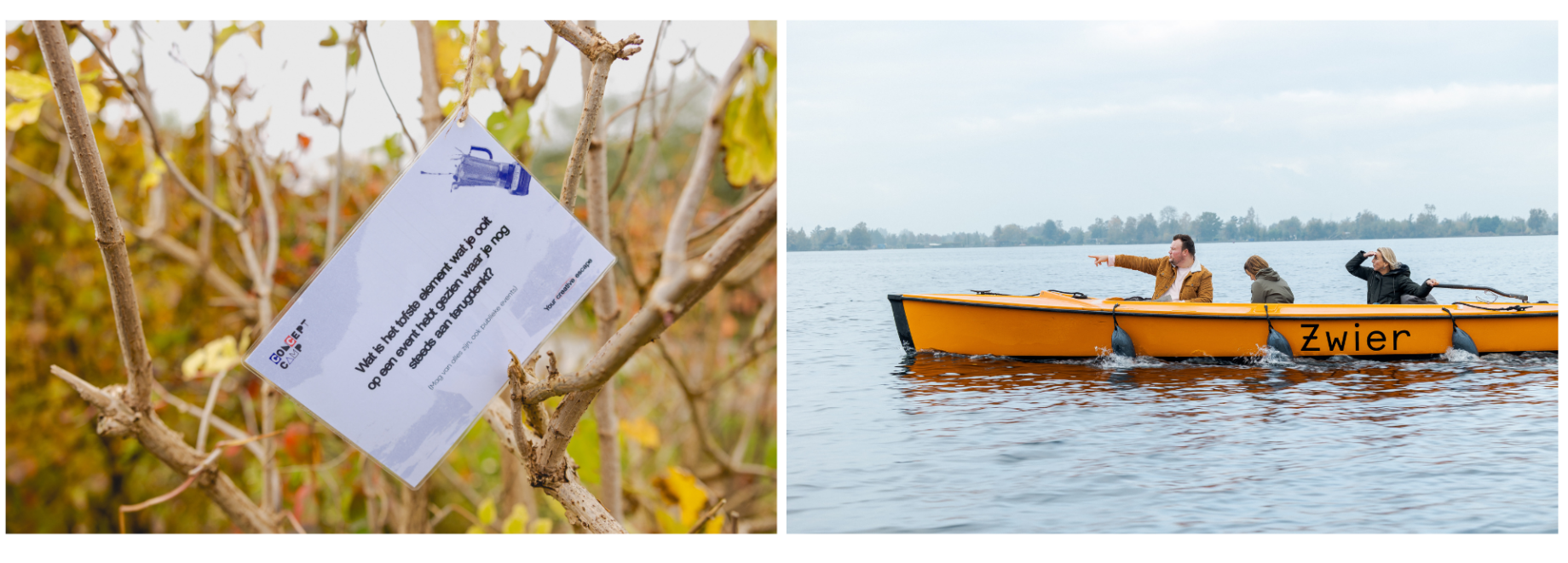
One example of a programme where space was added on purpose is our own Obsession Concept Camp: a multi-day setting where clients worked together on strategy. Walking, canoeing and informal conversations were not extras, but a full part of the programme. Mark says: “We notice that information resonates better when people also have the space to reflect, talk about it and let ideas settle.”
AI as an accelerator
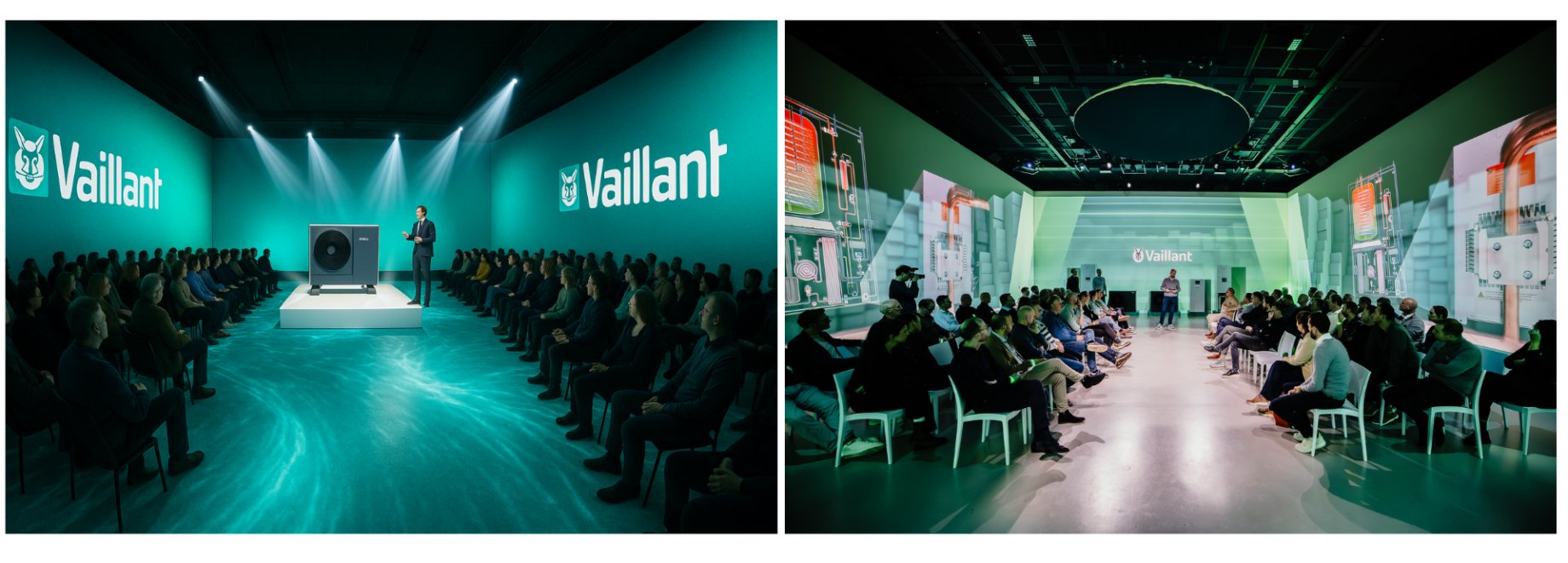
AI has also entered the world of concept development. It helps with research, inspiration and visualising ideas. “A picture says more than a thousand words. It helps clients get a better feel for an idea,” Mark agrees. For a recent event for Vaillant, AI was used to translate the concept into visuals at an early stage. This brought the full customer journey to life: from the first welcome to the final touchpoint. The images helped make choices visible more quickly and turned out to be almost exactly achievable in the final production. “It helped enormously in aligning with partners and convincing the client,” says Mark.
At the same time, Mark also sees a risk. AI makes it easier than ever to generate ideas quickly. As a result, almost anyone can now create dozens of concepts in a short time. But when everyone uses the same tools, the same patterns also appear. Mark says: “AI is the fast food of creativity. Quick, attractive and instantly satisfying. But just like fast food, it mainly fills the first hunger. It misses the value that a meaningful concept needs.” In short, human distinctiveness remains essential. And in the end, that is what we do it for.